This portfolio brings together my English Technical Writing projects and shows how the communication skills I practiced in class connect to my future career in aviation.

I am Ibrahim Aldawsari, a Professional Aviation student at Kansas State University Salina and an instrument-rated pilot working toward commercial pilot qualifications. My long-term goal is to contribute to Saudi aviation as an airline pilot. ENGL 302 strengthened a side of aviation that is easy to underestimate: the ability to communicate technical information clearly, accurately, and safely. The projects in this portfolio follow one professional story. I first introduced myself to Saudia, then designed customer information, proposed a cadet mentorship program, and created an instruction manual for the mentors who would operate it. Together, the artifacts show how audience awareness, visual design, research, and procedural writing support aviation professionalism.
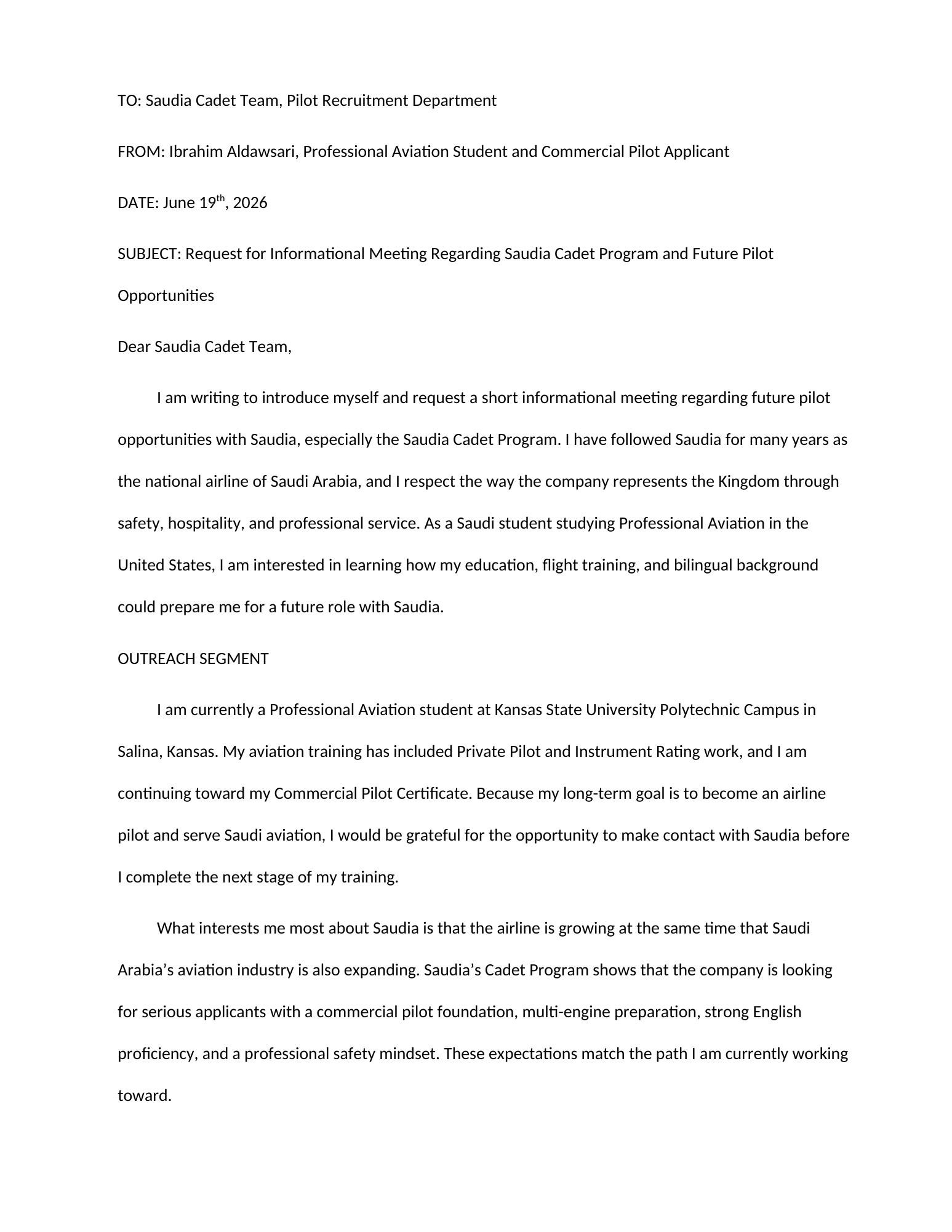
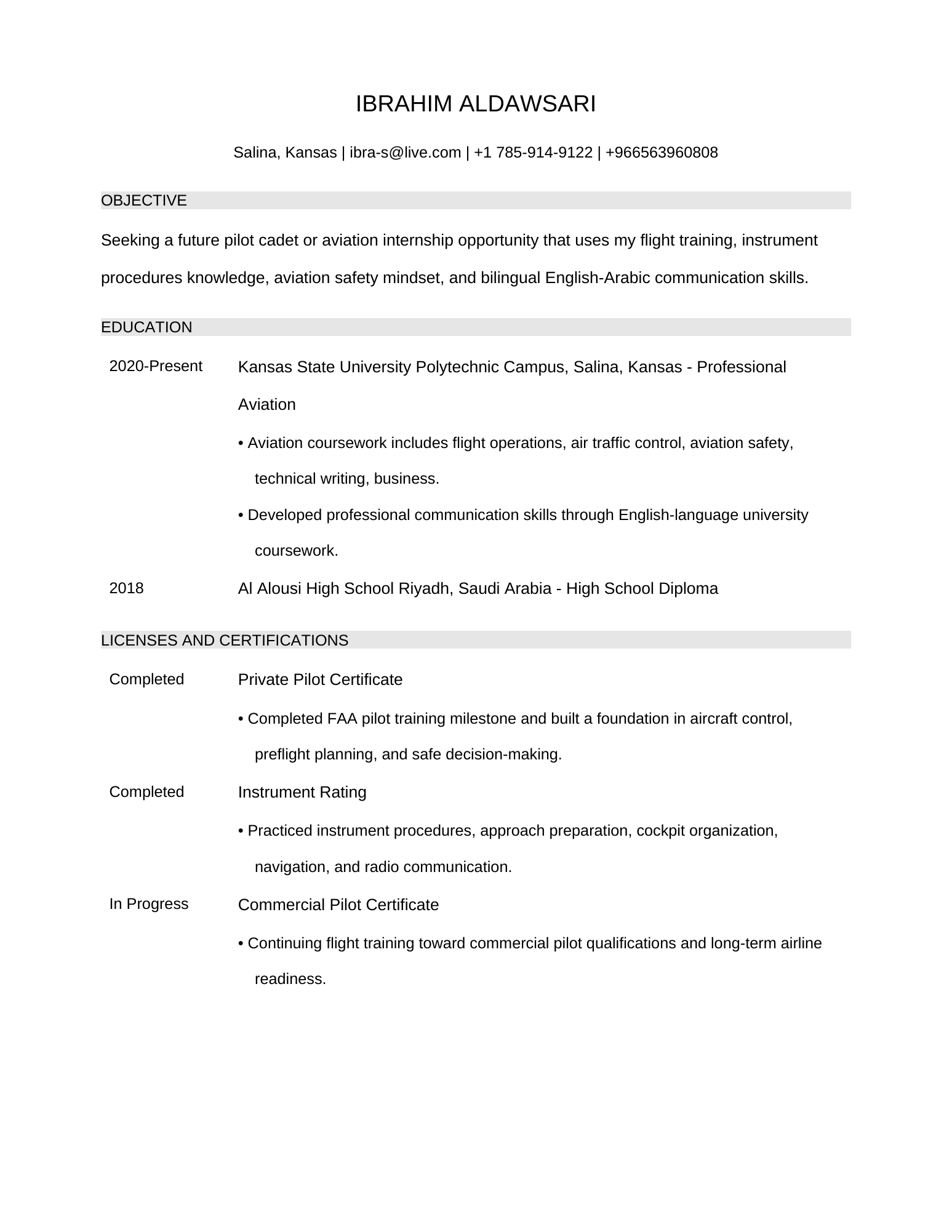
A formal outreach memo to Saudia’s pilot recruitment team and a two-column aviation resume designed for fast review.
The audience for this project was Saudia’s pilot recruitment team, so I used a formal tone and organized the memo around the company’s needs rather than only my career goals. I connected my U.S. aviation education, Saudi background, bilingual communication, and safety mindset to Saudia’s mission. The resume uses a two-column structure so dates and qualifications can be scanned quickly. My main success was creating a clear professional identity as a developing pilot. My struggle was balancing confidence with honesty because I am still completing commercial training. This genre will help me contact airlines, pursue cadet opportunities, and present my qualifications efficiently.


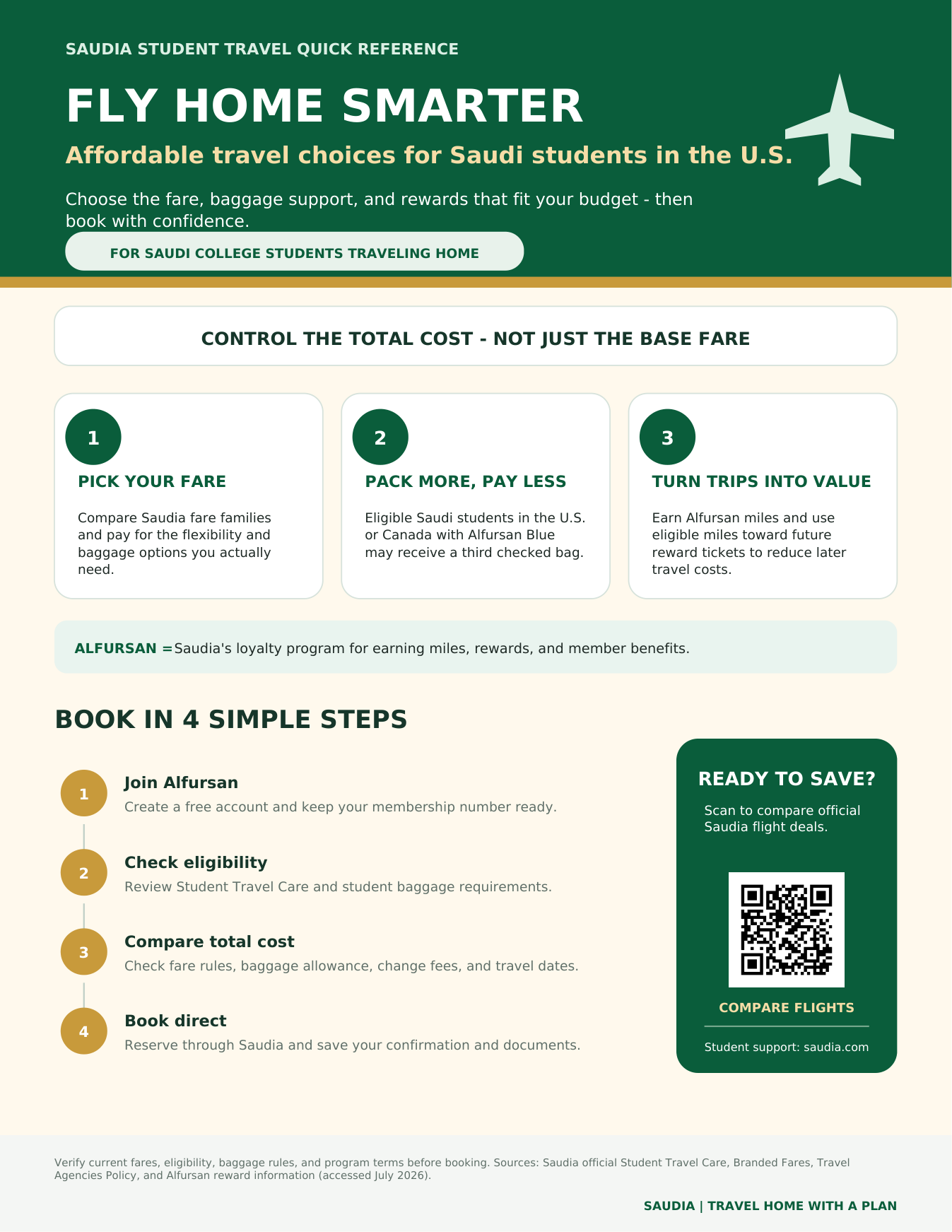
A quick-reference infographic that informs and persuades Saudi students in the United States to compare Saudia’s total trip value.
This infographic targets Saudi students studying in the United States who regularly compare the cost of traveling home. I used a direct headline, short benefit statements, a simple booking sequence, and a QR code to persuade students to check Saudia before purchasing. The design relies on hierarchy, contrast, alignment, repetition, and white space so the main idea can be understood quickly on a phone or printed page. My strongest choice was focusing on total trip value instead of claiming that one fare is always cheapest. The challenge was simplifying baggage, fare, and loyalty information without overstating benefits. Airlines could use this genre for focused customer campaigns.
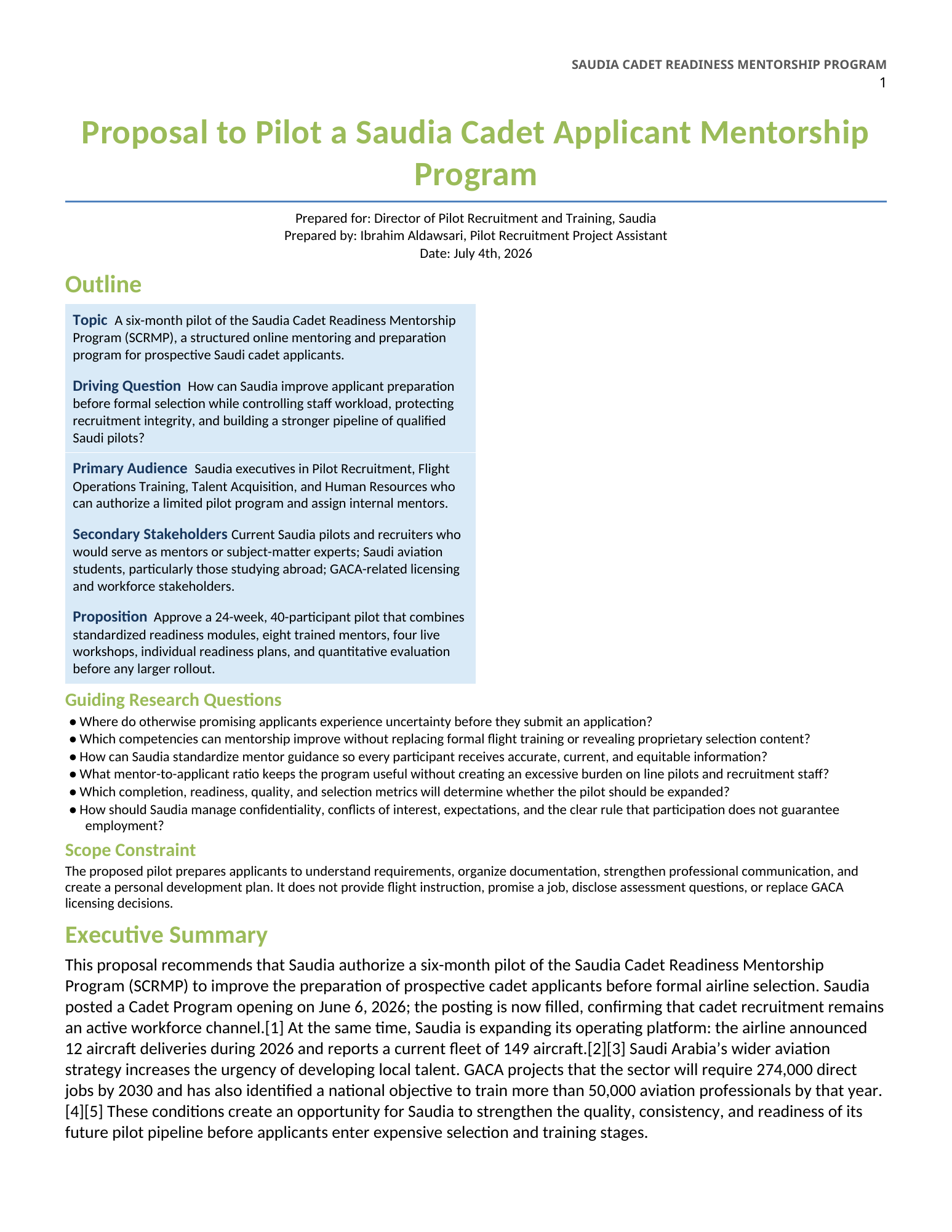
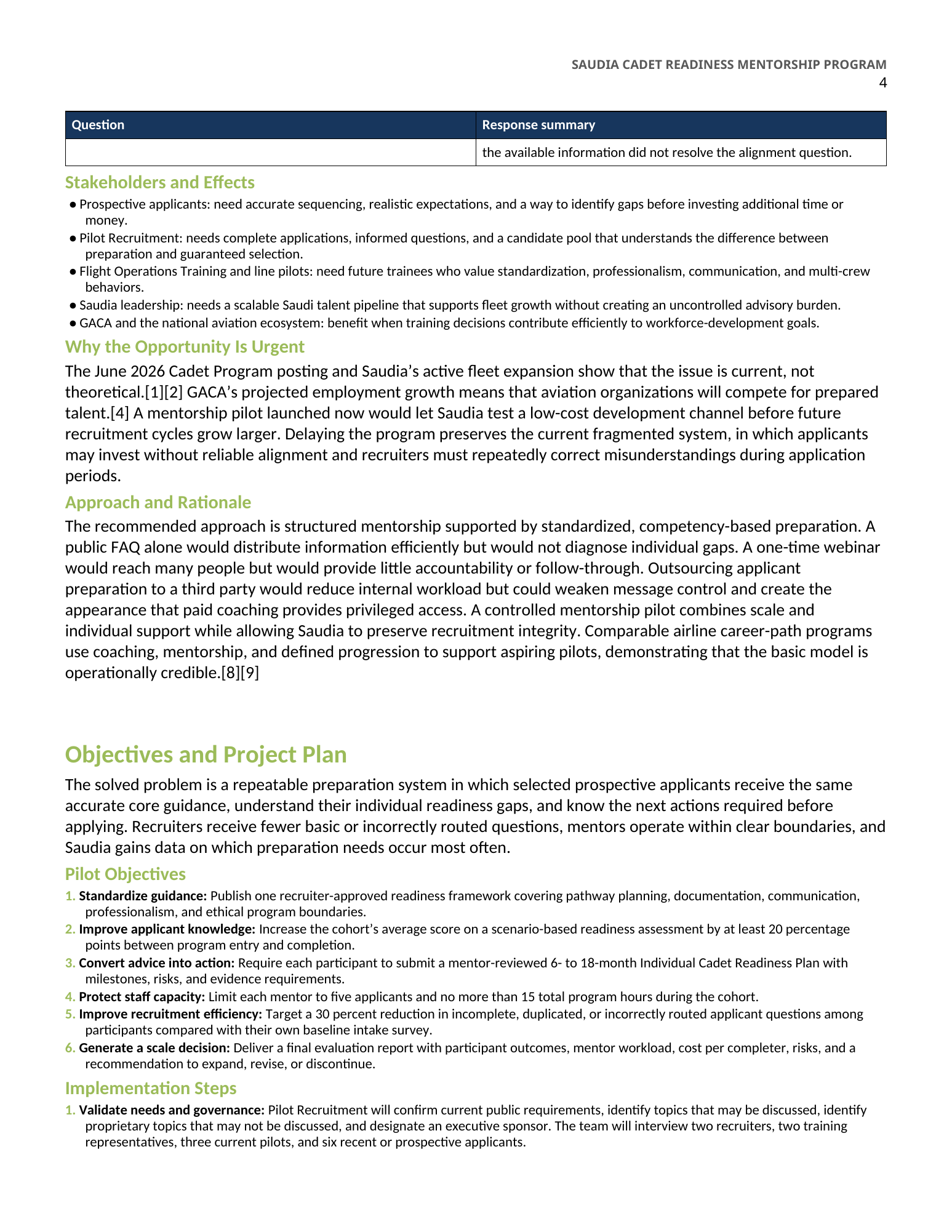
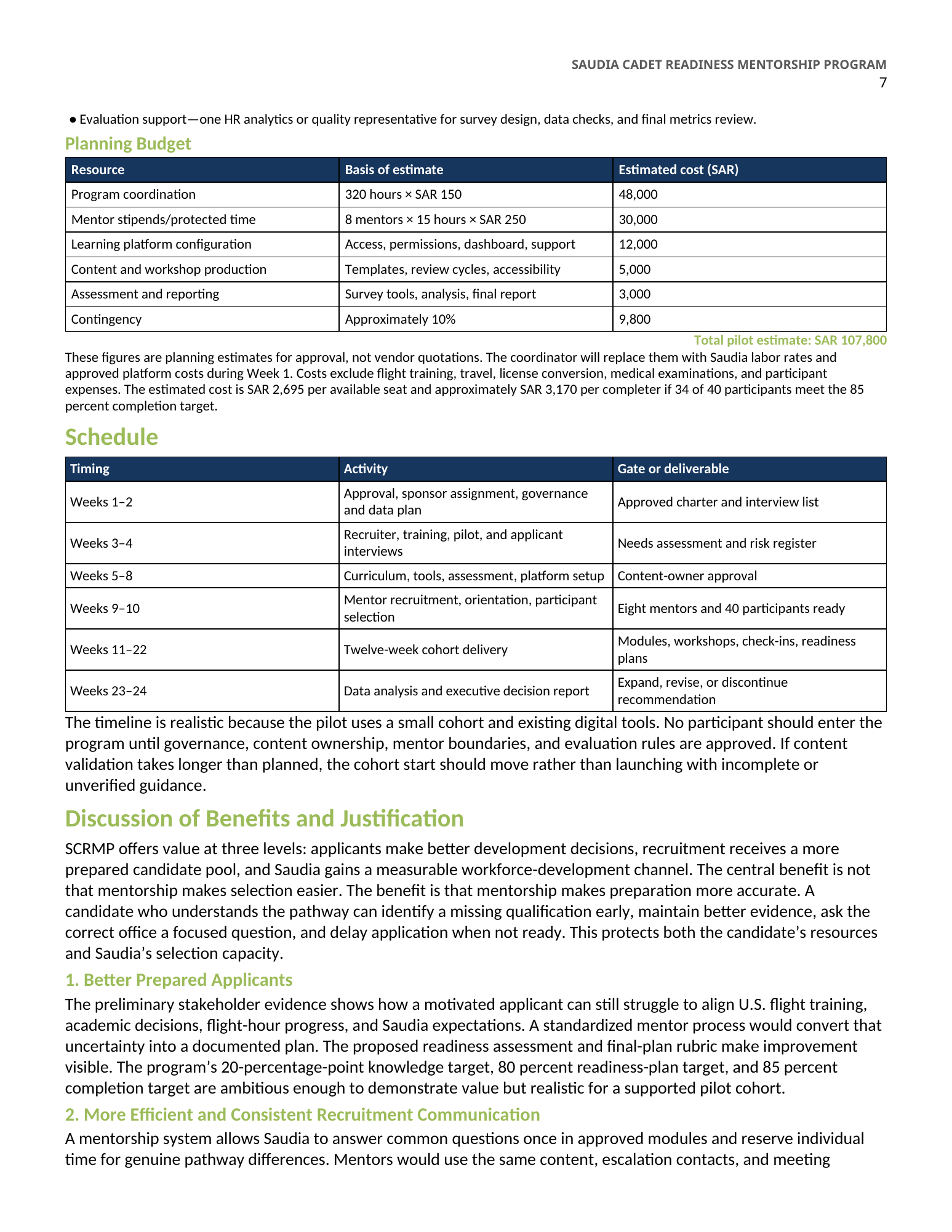
A six-month pilot proposal for a structured Saudia Cadet Readiness Mentorship Program.
The proposal addresses Saudia leaders in pilot recruitment and training. I presented cadet preparation as an organizational problem, then proposed a controlled six-month mentorship pilot with forty participants, eight mentors, four learning modules, a schedule, a budget, and measurable targets. Clear headings, tables, quantitative metrics, and implementation gates make the document usable by an executive reader. My greatest success was turning a broad idea into a realistic technical project plan. The most difficult part was estimating costs and outcomes without access to internal Saudia data, so I identified estimates and recommended validation interviews. Proposal writing will help me advocate for safety, training, and operational improvements in aviation.


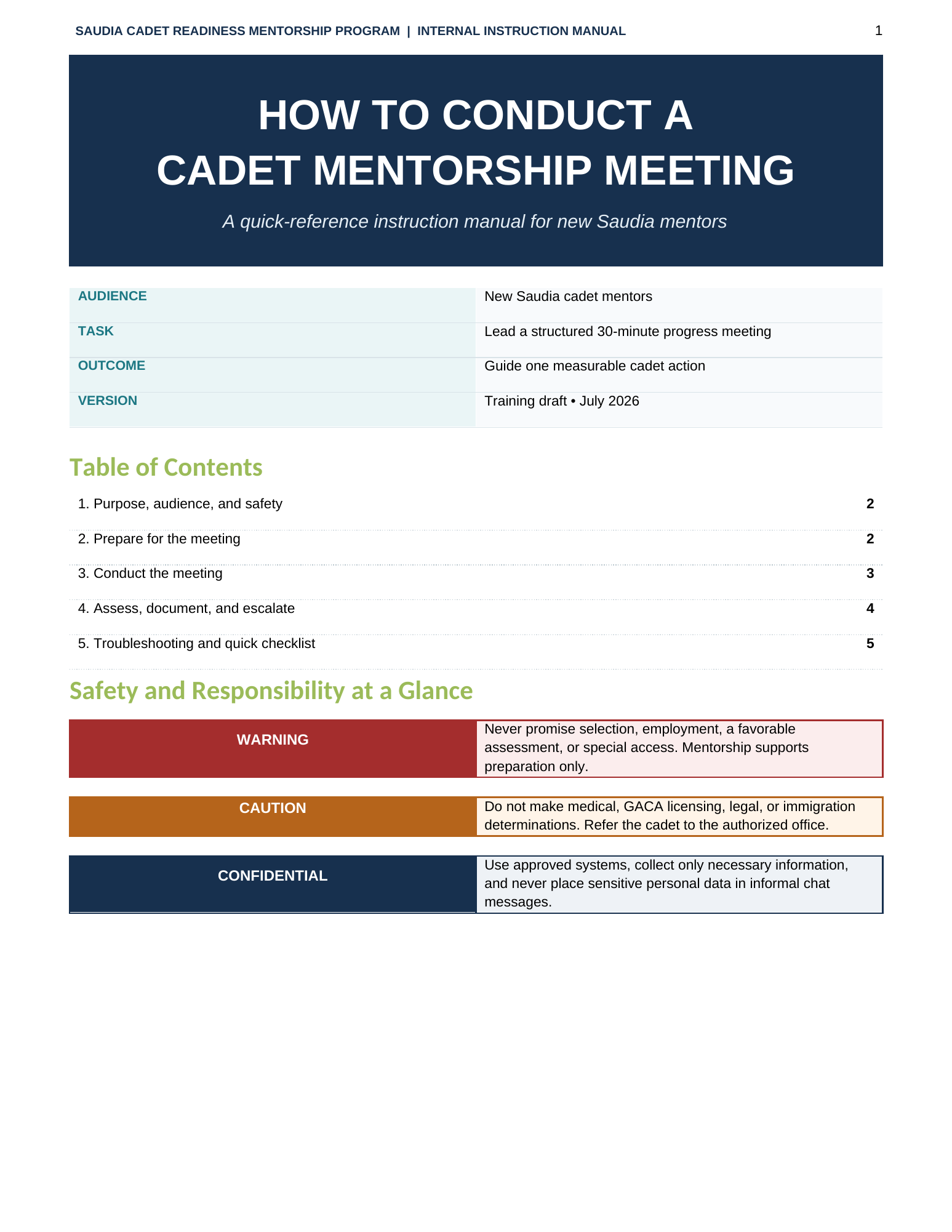
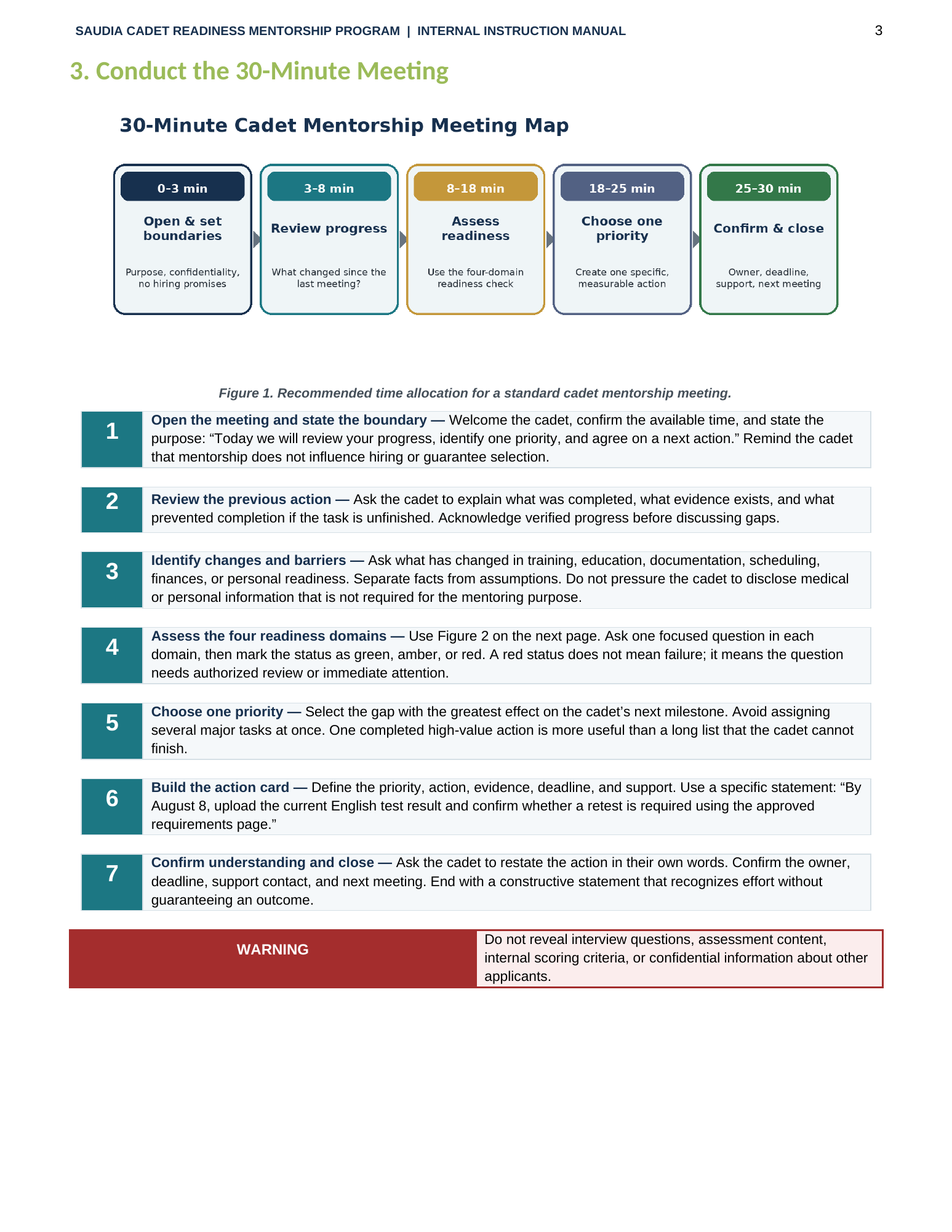
A five-page internal manual that teaches new Saudia mentors how to guide one measurable cadet action during a structured 30-minute meeting.
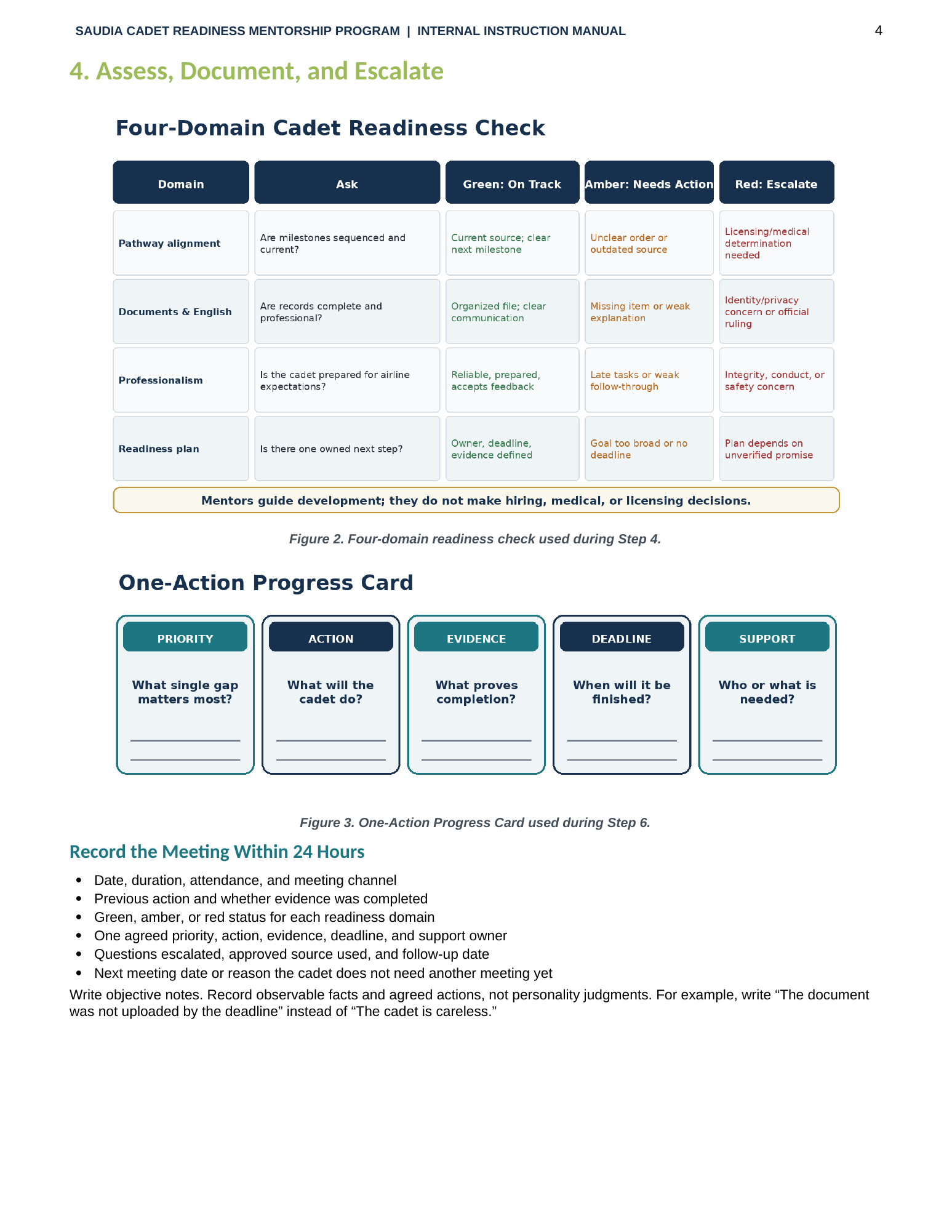
This instruction manual is written for new Saudia mentors who need to guide cadet progress consistently and safely. I used imperative steps, a thirty-minute meeting map, a four-domain readiness matrix, an action card, an escalation diagram, warnings, and a troubleshooting table. These choices reduce uncertainty and help mentors find information quickly during a real meeting. The strongest feature is the boundary between mentorship and hiring, licensing, medical, or confidential decisions. My main challenge was making the process complete without overwhelming a new user. Instruction manuals are important in aviation because repeatable procedures, precise wording, visual cues, and timely warnings support standardization, accountability, and safer performance.


ENGL 302 helped me connect flight training with professional communication. As I work toward commercial and multi-engine qualifications, I will need to present my experience accurately, ask focused questions, interpret requirements, and document decisions. The outreach memo and resume support applications and networking. The QRI demonstrates how to turn complicated travel information into a clear passenger message. The proposal shows how to define an operational problem, justify resources, anticipate objections, and measure results. The instruction manual shows how precise language and visual warnings can support standardization and safety. In an airline career, I expect to use these skills in applications, reports, safety communication, training materials, briefings, and improvement projects.
Continue commercial and multi-engine preparation while documenting training accurately.
Use professional outreach, a targeted resume, and focused questions to pursue cadet and entry-level opportunities.
Apply technical writing to reports, training, safety communication, and operational improvement projects.